Can You Have ADHD Without Being Hyperactive?
Many adults associate attention-deficit/hyperactivity disorder (ADHD) with children who cannot sit still, interrupt conversations, or have excessive energy. However, ADHD does not always involve noticeable hyperactivity.
Some adults experience significant difficulties with attention, organization, forgetfulness, and completing tasks without appearing physically restless.
This presentation is commonly referred to as predominantly inattentive ADHD.
What Is Inattentive ADHD?
ADHD is a neurodevelopmental disorder that affects attention, impulse control, and executive functioning.
According to the National Institute of Mental Health (NIMH), ADHD symptoms can continue into adulthood and interfere with relationships, work performance, and daily responsibilities.
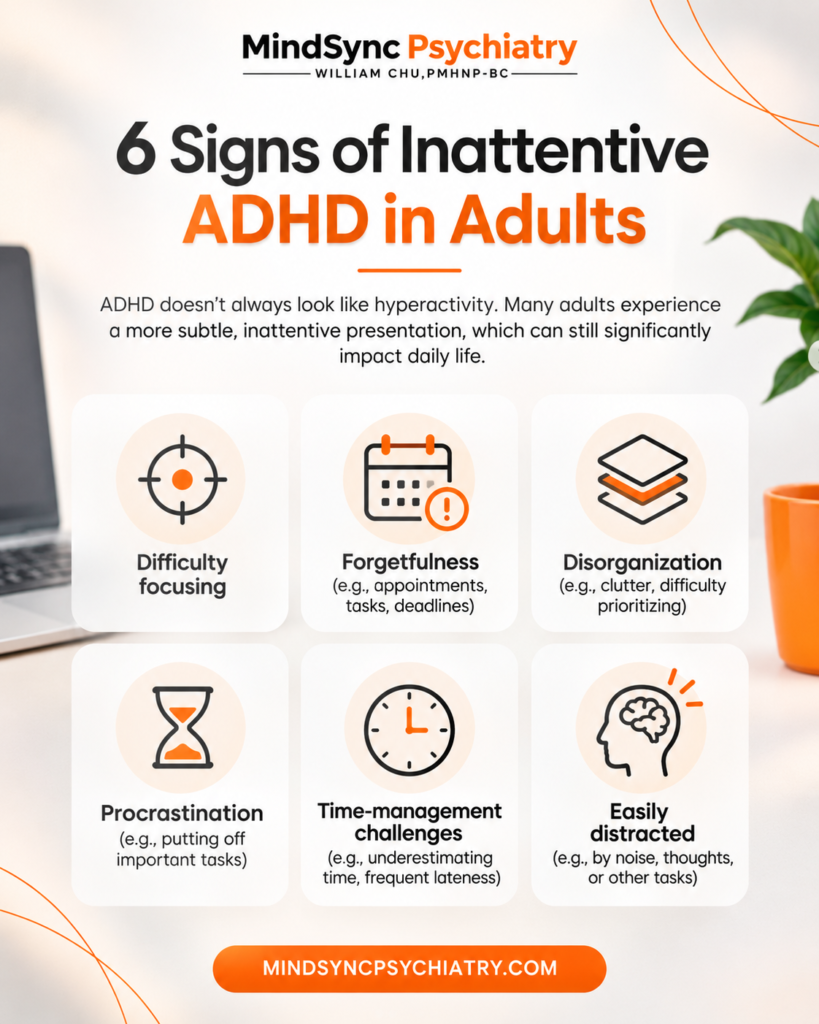
People with predominantly inattentive ADHD may experience:
- Difficulty maintaining attention during meetings or conversations
- Frequently misplacing important items
- Forgetting appointments or responsibilities
- Starting multiple projects without finishing them
- Difficulty prioritizing tasks
- Becoming easily distracted
- Avoiding activities requiring sustained mental effort
These symptoms can occur even when someone appears calm, quiet, or professionally successful.
Why Is ADHD Sometimes Missed in Adults?
Some people develop strategies to compensate for their attention difficulties.
For example, an adult may rely heavily on reminders, calendars, strict routines, or working late into the evening to complete responsibilities.
Others may have performed well academically but struggle when professional or family responsibilities become more demanding.
ADHD is not diagnosed simply because someone is forgetful or disorganized. Symptoms must meet established diagnostic criteria, including evidence of childhood onset, persistence across settings, and meaningful impairment.
Can ADHD Be Confused With Anxiety or Depression?
Yes. Anxiety, depression, sleep disorders, and other medical or psychiatric conditions can produce symptoms that resemble ADHD.
For example, someone experiencing generalized anxiety may struggle to concentrate because of persistent worrying. A person with depression may experience reduced motivation, fatigue, or slowed thinking.
A comprehensive psychiatric evaluation helps determine whether symptoms are related to ADHD, another condition, or a combination of disorders.
How Is Adult ADHD Treated?
Treatment depends on symptom severity, medical history, personal preferences, and coexisting conditions.
Evidence-based options include stimulant medications, nonstimulant medications, and behavioral interventions such as cognitive behavioral therapy (CBT).
Stimulant medications are among the most extensively studied treatments for adult ADHD. Nonstimulant options may be appropriate when stimulants are poorly tolerated, contraindicated, or ineffective.
Lifestyle strategies, including regular sleep, exercise, and organizational systems, may complement treatment.
When Should You Seek an ADHD Evaluation?
Consider a professional evaluation if attention difficulties consistently interfere with your work, relationships, education, or daily responsibilities.
At MindSync Psychiatry, William Chu, MSN, APRN, PMHNP-BC, provides psychiatric evaluations and medication management for adolescents ages 16 and older and adults in New Jersey.
Appointments are available through telehealth and designated in-person locations.
Learn more about MindSync Psychiatry and scheduling.
Frequently Asked Questions
Can you have ADHD without being physically restless?
Yes. Predominantly inattentive ADHD can occur without prominent hyperactive symptoms.
Can ADHD be diagnosed for the first time in adulthood?
Yes. Although diagnostic criteria require evidence of symptoms beginning in childhood, ADHD may not be recognized until adulthood.
Does everyone with ADHD need medication?
No. Treatment is individualized and may include medication, psychotherapy, behavioral strategies, or a combination.
Medical references
- National Institute of Mental Health. ADHD in Adults: 4 Things to Know. https://www.nimh.nih.gov/health/publications/adhd-what-you-need-to-know
- American Academy of Family Physicians. Attention-Deficit/Hyperactivity Disorder in Adults. 2024. https://www.aafp.org/afp/2024/0800/attention-deficit-hyperactivity-disorder-adults
Medically reviewed by William Chu, MSN, APRN, PMHNP-BC | November 15, 2026.